Beyond the Pump: How Data Fragmentation and Geopolitical Risk Threaten SME Haulage Liquidity
Table of Contents
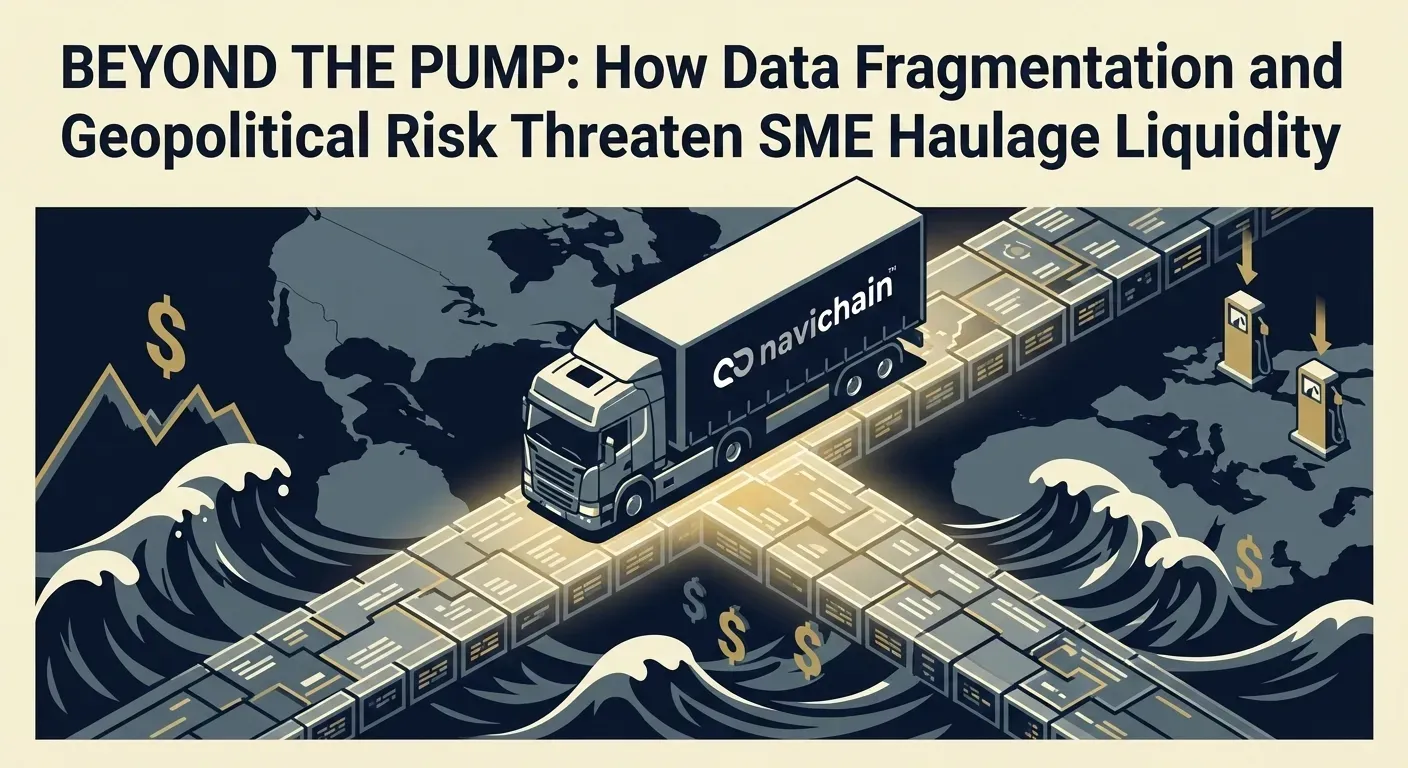
Beyond the Pump: How Data Fragmentation and Geopolitical Risk Threaten SME
The haulier's vise: When political whims become liquidity crises
Haulers face a multitude of pressures, including fluctuating fuel costs due to political decisions, impacting their financial planning and liquidity.
For Small to Medium-sized Enterprises (SMEs) in the European haulage sector, stability is a memory. The last few years have been a relentless exercise in crisis management. Operations directors and business owners find themselves caught in a vise, squeezed by intense competition from larger players on one side, and a barrage of unpredictable, escalating costs on the other. Energy and fuel, long the single largest operating expense, have become a source of acute strategic pain. This is no longer a simple market fluctuation; it is a tool of geopolitical maneuvering. Consider the recent events in Sweden regarding the 'reduktionsplikt,' or reduction obligation, which mandates the blending of biofuels. In 2024, a new political directive dramatically cut this mandate, causing the price of diesel to plummet overnight. While this offered temporary relief, it served as a brutal lesson: your most significant cost item is entirely at the mercy of unpredictable political decisions. This volatility, mirrored by new toll structures in Germany and the impending EU ETS 2, makes accurate financial planning impossible. It transforms budgeting into guesswork and places acute, constant pressure on cash flow and liquidity. The instinctive response is to double down on what can be controlled: renegotiating contracts, optimizing routes for fuel savings, and demanding more from drivers. But this is a tactical trap. By focusing all strategic energy on this single, visible crisis, leaders are ignoring a far greater, systemic risk—one that is silent, digital, and woven into the very fabric of their operations.
The real threat: Data fragmentation and the cost of invisibility
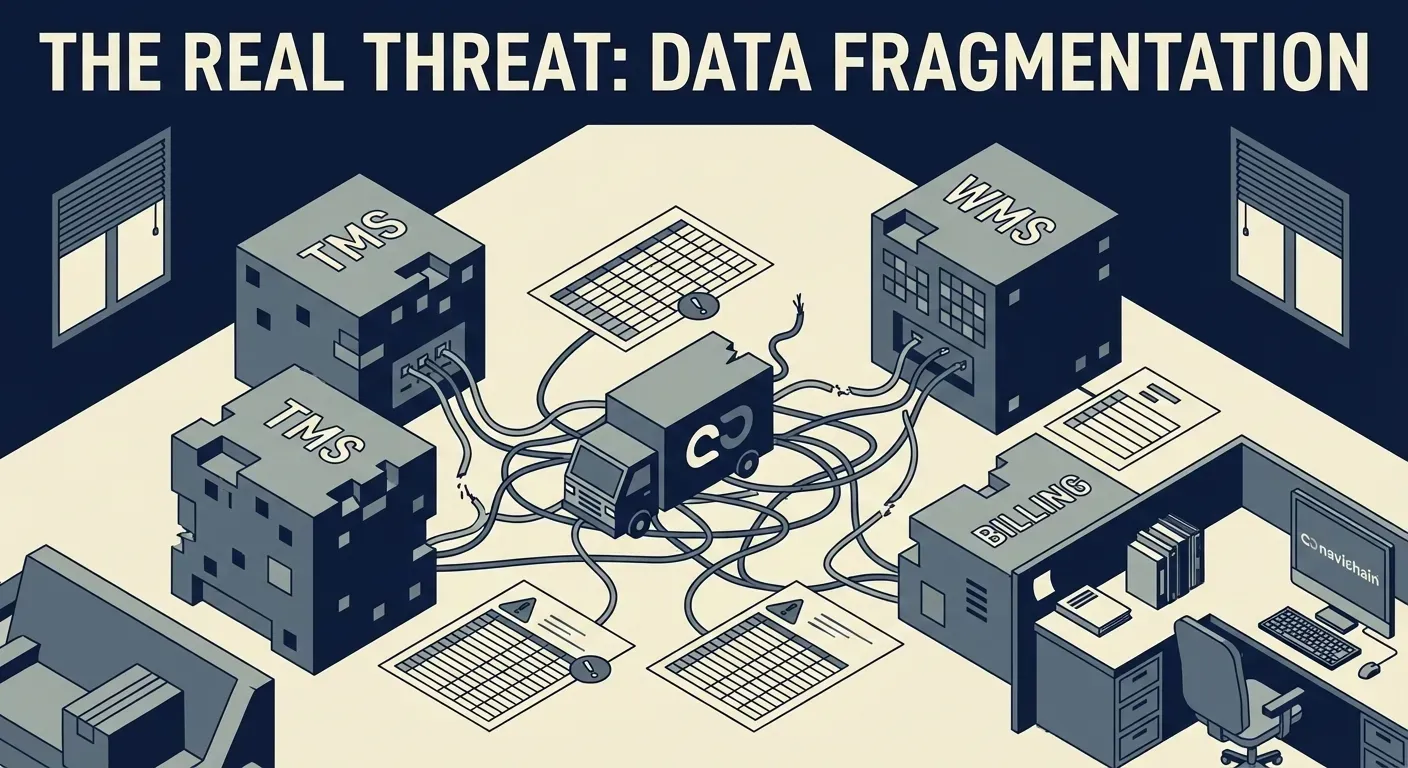
The true vulnerability for most SMEs isn't the price of diesel; it's the fragmentation of their data. A typical logistics SME runs on a patchwork of disconnected systems: one for transport management (TMS), another for warehouse management (WMS), perhaps a separate billing program, and countless spreadsheets to fill the gaps. This fragmentation is not a minor inconvenience; it is a critical operational liability.
- It Destroys Efficiency: Without a single source of truth, workflows are manual and error-prone. Staff waste hours re-keying data, cross-referencing invoices, and manually tracking assets. This administrative drag is a direct, parasitic drain on profitability.
- It Obscures Insight: When your transport data doesn't speak to your warehouse data, and neither speaks to your billing data, you are operationally blind. You cannot accurately calculate the true cost-to-serve a client. You cannot identify which routes are actually profitable. You cannot see the creeping inefficiencies that, in aggregate, cost more than a 10% swing in fuel prices.
- It Prevents Agility: In a volatile market, the ability to pivot is paramount. When a political decision (like the 'reduktionsplikt') changes your cost basis overnight, you need to re-model your pricing and routes immediately. With fragmented data, this is impossible. You are forced to react with instinct instead of intelligence, ceding the advantage to larger, data-driven competitors. This internal, structural weakness is a massive financial risk. But it is compounded by an external, geopolitical risk that most SMEs have never even been asked to consider.
The geopolitical data trap: Why your cloud provider is a liability
To solve the fragmentation problem, many SMEs have turned to modern, cloud-based SaaS solutions. This is a logical step, but it carries a devastating, hidden risk. Where is your data? If your logistics platform—your TMS, your WMS, your client lists, your pricing—is hosted by a company subject to non-European jurisdiction, your data is not your own. The primary conflict for European businesses is the clash between the EU's General Data Protection Regulation (GDPR) and the US Clarifying Lawful Overseas Use of Data (CLOUD) Act.
- GDPR demands that you, the data controller, protect your clients' and your own data with the highest standards of privacy and security.
- The US CLOUD Act empowers US authorities to compel American tech companies (including their foreign subsidiaries) to hand over data stored on their servers, regardless of where in the world that data is physically located. This means if your logistics provider is a US company, or even a European company that builds its platform on US-based cloud infrastructure (like Amazon Web Services, Google Cloud, or Microsoft Azure), your data is subject to the CLOUD Act. Your data, containing sensitive commercial details about your operations and your clients, can be accessed by a foreign government, potentially without your knowledge and in direct violation of the GDPR principles you are legally bound to uphold. This is the very definition of geopolitical risk. You have fled the volatility of national politics ('reduktionsplikt') only to expose your company's entire digital nervous system to the volatility of international politics. For an SME, the legal, financial, and reputational damage of this data compliance failure could be an extinction-level event.
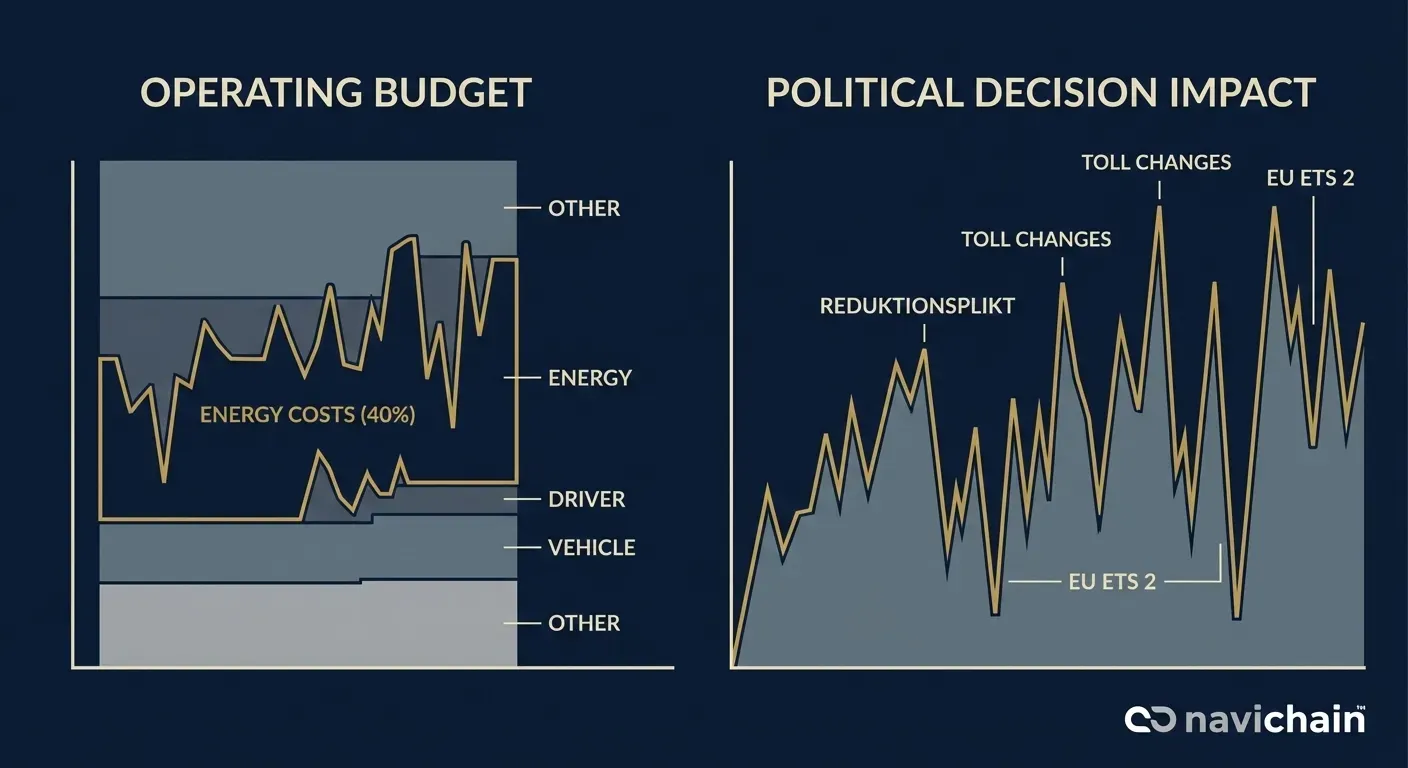
The conflict between GDPR and the US CLOUD Act creates a significant geopolitical risk for European SMEs using US-based cloud services.
A new framework for resilience: Unification, sovereignty, and intelligence
Surviving in this new era requires a new strategic framework. Resilience is no longer about weathering the storm; it's about building an operation that is structurally immune to it. This framework is built on three non-negotiable pillars. 1. Unified Operational Fabric: You must eliminate fragmentation by operating from a single, unified platform. Your TMS, WMS, asset management, billing, and order management must function as one system, drawing from one source of truth. This is the only way to eliminate administrative drag, gain true visibility, and achieve the agility to react to market shocks. 2. Absolute Data Sovereignty: You must know where your data lives, and it must live under your own legal jurisdiction. For European SMEs, this means your operational platform and its data must be hosted, processed, and managed within the EU—ideally in a country with strong data privacy laws, like Sweden. This is the only way to guarantee full GDPR compliance and render foreign laws like the US CLOUD Act irrelevant. Data sovereignty is not an IT issue; it is a core pillar of corporate governance and risk management. 3. Embedded Analytic Intelligence: Once you have unified, secure data, you can finally use it. The final pillar is an embedded intelligence or AI layer that runs securely on top of your sovereign data. This allows you to move from reactive to predictive management, analyzing your own deep operational data to unlock efficiencies, optimize routes in real-time, and model the impact of market changes before they happen.
From diagnosis to design: The blueprint for a resilient logistics operating system
Fig 2: Principle 1: The Unified Operational Fabric The platform must function as a single, cohesive 'central nervous system' for your entire operation.
We have established that European SME hauliers face a dual threat: the visible, economic volatility of costs like fuel, and the invisible, geopolitical risk of fragmented and non-sovereign data. The strategic response, therefore, must be a new kind of operating system designed from the ground up to solve these specific challenges. This is not a theoretical exercise. We can distill our analysis into a clear blueprint—a set of core principles that any effective, modern logistics platform for European SMEs must embody. Use these hallmarks as a checklist to evaluate any potential solution.
Principle 1: The unified operational fabric
The platform must function as a single, cohesive 'central nervous system' for your entire operation. The era of bolting together separate TMS, WMS, and billing software is over. True efficiency and visibility demand a single source of truth. This means data from an incoming order flows seamlessly to dispatch (TMS), to the warehouse for picking (WMS), to the truck's asset management, and to the final invoice (Billing) without manual re-entry. This unified fabric is the foundation of agility, allowing you to see your entire cost-to-serve and operational status in one view.
Principle 2: The sovereign data architecture
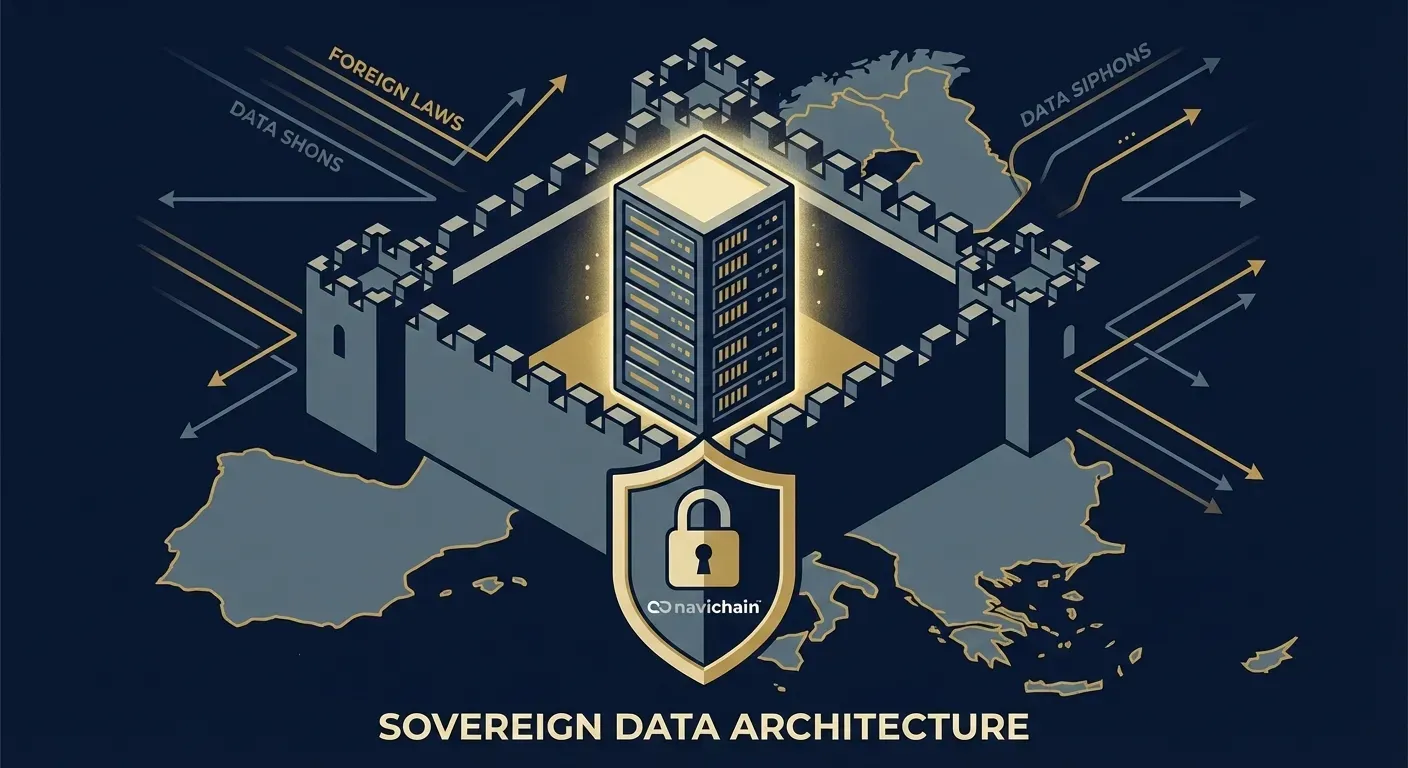
This principle is a non-negotiable foundation of trust and risk management. For a European SME, any platform under consideration must be built on a sovereign data architecture. This means the software and, critically, your operational data are hosted and processed on infrastructure that resides within the European Union, under the full protection of EU law. This architecture must guarantee full GDPR compliance and, most importantly, be explicitly shielded from the jurisdiction of extraterritorial laws like the US CLOUD Act. Ask your provider: 'Where is my data, and what foreign laws is it subject to?' If the answer is 'AWS' or 'Azure,' you have a geopolitical risk.
Principle 3: Embedded analytic intelligence
Finally, the platform must provide intelligence, not just data storage. A modern logistics OS must have an embedded analytics or AI layer that can analyze the vast, unified data generated in Principle 1. Crucially, this intelligence layer must operate within the secure, sovereign environment of Principle 2. This allows you to perform deep, secure analysis on your own data to uncover predictive insights, optimize fleet efficiency, and model financial scenarios without ever exposing your most sensitive commercial data to third-party risks.
References/sources
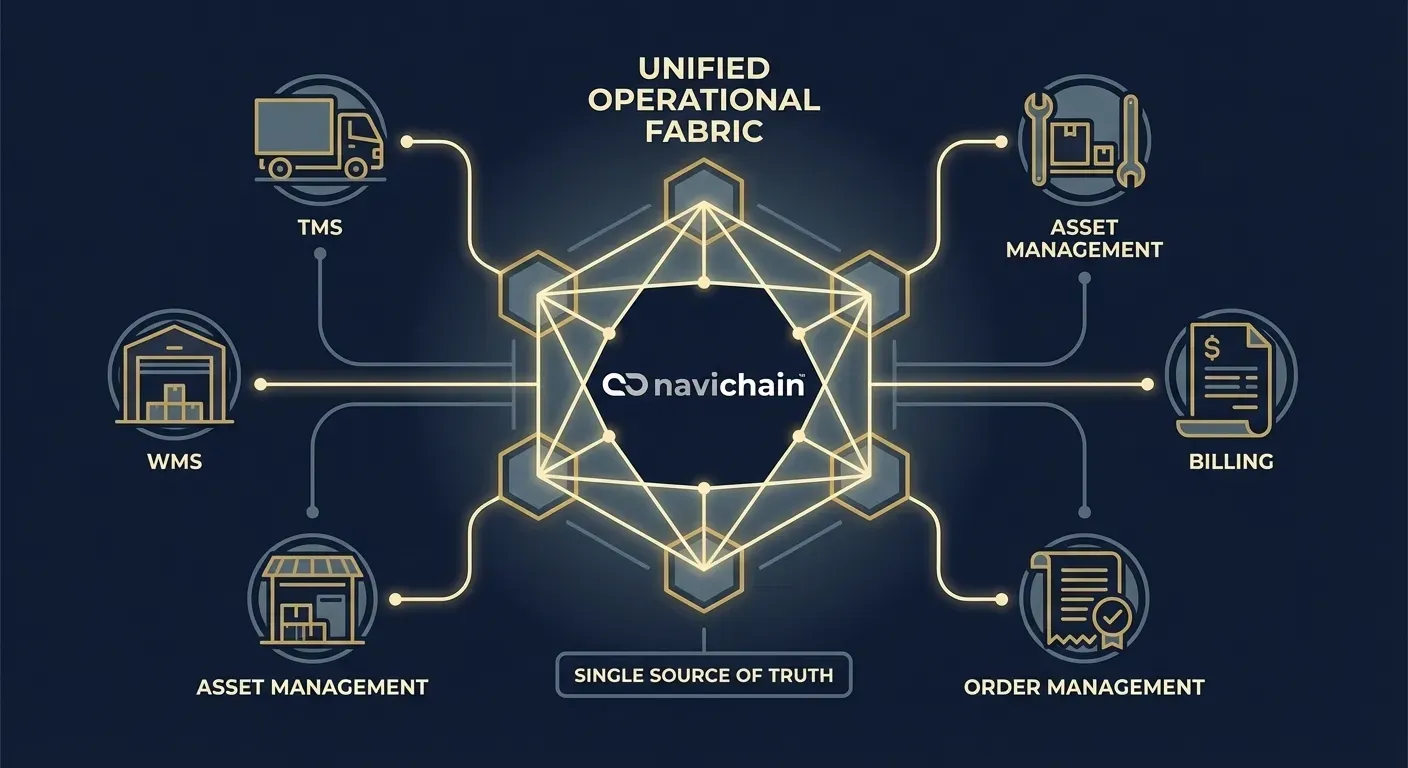
Fig 3: Schematic representation of a sovereign data architecture, highlighting data residency within the EU and protection from extraterritorial laws, ensuring GDPR compliance and enhanced security for sensitive logistics data.
- International Road Transport Union (IRU). (2024). Global Transport Market Monitor. (Provides data on cost pressures, including fuel and driver shortages). <https://www.iru.org/intelligence/iru-monitors>
- Government Offices of Sweden. (2023). Government proposes historically large reduction in the reduction obligation for 2024-2026. (Details on the political decision impacting fuel prices). <https://www.government.se/press-releases/2023/09/government-proposes-historically-large-reduction-in-the-reduction-obligation-for-2024-2026/>
- Ti Insight. (2024). European Road Freight Transport 2024. (Analysis of market trends, costs, and regulatory pressures like the German Maut). <https://ti-insight.com/reports/european-road-freight-transport-2024/>
- European Data Protection Board (EDPB). (2020). Frequently Asked Questions on the judgment of the Court of Justice of the European Union in Case C-311/18 - Data Protection Commissioner v Facebook Ireland Ltd and Maximillian Schrems. (Official guidance on the GDPR vs. foreign data transfer implications).
Fig 4: We have established that European SME hauliers face a dual threat: the visible, economic volatility of costs like fuel, and the invisible, geopolitical risk ...
Enabling the blueprint: The navichain SaaS unified logistics platform
This white paper has laid out a strategic blueprint for resilience, built on the principles of a Unified Operational Fabric, Sovereign Data Architecture, and Embedded Analytic Intelligence. navichain SaaS is a platform designed from the ground up to embody this blueprint for European SMEs.
- A Unified Operational Fabric: We provide a single, integrated logistics operating system. Our platform is not a collection of separate tools; it is a seamless solution where Transportation Management (TMS), Warehouse Management (WMS), Asset Management, Billing Management, and Order Management work as one. This breaks down the data silos that create inefficiency and risk, delivering a single source of truth for your entire operation.
- A True Sovereign Data Architecture: This is our core differentiator. The entire navichain SaaS platform is hosted on our own proprietary infrastructure in Sweden. Your data stays in Sweden, under Swedish and EU jurisdiction. This guarantees full GDPR compliance and, critically, provides complete immunity from the reach of foreign legislation like the US CLOUD Act. This is not a legal workaround; it is structural, sovereign security.
- Embedded Analytic Intelligence: Because your unified data rests on our secure Swedish infrastructure, we are able to deploy our integrated AI to run deep, secure data analysis. This new capability allows our clients to unlock unique efficiencies and predictive insights from their own operational data, without ever compromising its security or sovereignty. Our mission is to democratize logistics technology, empowering SMEs to increase efficiency, reduce costs, and thrive by competing on intelligence and resilience, not just scale.
The navichain SaaS platform delivers a unified operational view, empowering SMEs to leverage data-driven insights for enhanced resilience and competitive advantage.

Navichain's platform provides a holistic view of the supply chain, enabling SMEs to leverage integrated data analysis for improved decision-making and operational efficiency.
Ready to optimise your supply chain?
navichain Insights Newsletter
Join the newsletter to receive the latest updates in your inbox.